Search Results
results
search
101 results found with an empty search
- Moving from surviving to thriving
The pace of change has never been faster, the demands on leaders and employees have never been greater, and the stakes have never been higher. And we are also experiencing levels of burnout that haven't been seen before... How do we move from burnout to thriving? The key question for leaders is how do you create an environment where people are challenged to grow, but also are supported enough so they don't burn out? And, also focus on building your own personal resilience. In this blog post we'll explore some ideas on what it takes to make your organisation thrive. Let’s go back two decades. Globally, trust still existed amongst our institutions, governments and media, much more so than today, and whilst technology was becoming a part of our lives, it hadn’t taken over our lives and workplaces. The tech start up movement was a mystery confined to the shores of California. And our workplaces operated in a traditional hierarchical sense, where perhaps 3 generations came together at work. We mostly had paid full time gigs, and movements in equity and inclusion were buffering on the edges of society. And climate change’s only voice was David Attenborough. Fast forward and we are now in a world where technology has taken over jobs. It’s created new ways of working, it's changed the way we live, the way we communicate and collaborate. We have become much more specialised, knowledgeable and are a complex society of giggers, with multiple generations interacting all at once! What it takes to engage with a baby boomer is vastly different to engaging with Gen Zs. And so leaders are needing to stretch and pivot and be more agile than ever before, and are themselves, more generationally diverse than ever before. The incessant onslaught of information is also overwhelming and leaders need to be mindful that whilst info transparency is transformative, too much can be counterproductive. Exercising judgment to select what we really need to know, right now is key. So what has any of this got to do with the burnout we are experiencing, and the desire to understand, cultivate and be a thriving society? Workplace stress is seemingly what’s triggering burnout, but is there another culprit? Could it be a lack of trust? Let's talk Trust It’s been in such rapid decline globally, that we are desperate to find it in the workplace, in fact we need it, and so employers/leaders are being looked up to to fill the void. It’s so fundamental to human beings that to thrive at work, leaders are required to bring a higher level of consciousness to elevate Trust.. Trust is a complex dynamic, it’s not as easy as saying be the expert, reliable and consistent. A leader needs to be aware of the behaviour, action and mindset that may erode trust. When leaders and organisations do strike the right balance, you will start to build psychological safety. Numerous field studies over the years by organisational scientists have also concluded, where burnout is less prevalent is where organizations have succeeded to cultivate a better culture and communality. Displaying genuine care, support, camaraderie and humour in the workplace can help to combat feelings of burnout. So back to our earlier question of how can leaders and organisations create or better yet, transform their environment to support people and teams to thrive? Give people and teams space to innovate, try different approaches to problem solving, learn to fail, make mistakes and exercise learning agility. Offer genuine support and build capabilities through opportunities to develop and upskill. Call on people’s attention to what is most important, sharing strategies and stories of hope and being discerning about what information you make available. When you’ve got high levels of trust, and are truly all in it together, that’s when the magic of being alive and thriving at work happens. From our research, thriving cultures have a few themes. Connection is a main theme, as is positive workplace, motivated (inspired workforce), learning mindset, diversity, equity and inclusion, wellbeing, purpose, capability growth, trust and great leaders who inspire and drive this kind of culture. And the skills most needed by leaders to achieve this? Emotional intelligence, authenticity, behavioural agility, purposefulness, trustworthiness, resilience and what we like to call, super communicators. Find out more about our programs here https://www.peopleq.com.au/programs Find out more about PQfactor, a monthly pulse tool focused on a high performing culture here https://www.peopleq.com.au/pqfactor Or make it easy for yourself, and call us today for a free consultation. Melina 0498 800 008 or Suria 0407 776 888
- Building your leadership muscle
When 360 feedback helps us explore what we don't know we don't know, DKDK If you're going to invest in 360 feedback for your leadership cohort, get it right, or it could be a costly exercise with no real gain, even worse it could be costly and backfire! Leaders should be involved with their one up in selecting rater's as well as your executive coach to help select the right rater's. This is one of the first discussions that takes place. I love a courageous leader who wants to involve mostly rater's with a less favourable view of their style, and who have minimal interaction with them, however the resulting feedback may not be useful or constructive. And talking executive coach, it's valuable to debrief with someone outside the organisation, to remove biases, bring an external perspective to the debrief, and coach the leader through to an action plan. It should be clear before embarking on this journey what the expectations are and that this is a development opportunity. How the report will be shared inside the organisation should be agreed to upfront as well. 360s help build a leaders self awareness, selecting the right tool for the leader is critical. A personality profile may report on what the leader already knows about themselves, something that is competency based is much easier to turn into practical outcomes. An emotional intelligence profile gives leaders so much more to work with and development tools that they can talk through with their executive coach. The initial debrief should be followed up with another coaching session and the leader should be able to confidently share an action plan for growth with their executive coach and one-up. Knowing how to respond to rater's that have provided feedback is also important and a step that is generally left out. We love our 360s and they form part of not just our coaching, but some of our leadership programs as well. Lets chat today if you'd like to find out more.
- Leaders, does it pay to be liked?
Nice leaders don’t have to finish last. In fact niceness or like-ability can and does win and is far from being ineffective or merely seen as a soft approach to leading. It was during COVID, and after having (and still) endured living and working in the most locked down city in the world, that I noticed a shift in the team's ability to navigate the uncertainty the pandemic was casting our world into, when I realised a shift in my leadership was necessary. With so many challenges being faced by everyone, and whilst I am already an empathetic leader, it was urgent and critical that I cultivate a style where empathy excelled and came first. As a result, I noticed a shift in my own mindset and language which took me to a more nurturing, creative and collaborative mode, less focused on inputs and KPIs which was my autopilot, and an unproductive conversation in a COVID world. I found myself naturally moving away from the day to day hustle of meeting targets and moving towards designing new strategies and goals; a collaborative road map where the team collectively contributed. Becoming a wayfinder and holding space for potential rather than simply exercising control, and doubling down lent itself to building trust and team resilience. This shift translated into outcomes and results well beyond market, and indeed my own, expectations. We were ‘in flow’. Leadership is not just about being in charge, calculated, data driven, unemotional and holding all the power. It's about connecting with employees on an emotional level and leading with empathy, trust and kindness to generate positive outcomes. COVID has resulted in a new style of leadership emerging. What got us here, won't get us to the future. As leaders we need to evolve and be guided more so by our intuition, sensing the field to tailor our approach, and not just relying on the data. PeopleQ leadership programs explore the traits that make you more likeable as a leader and how these traits translates into an improved bottom line. PeopleQ co-authors Curated Conversations, a safe and courageous space for leaders to explore the capabilities needed to lead in the fourth industrial revolution, and many of our leadership programs support leaders to build these skills. Find out more about our programs here.
- Take your Q with PeopleQ - episode 2
Why TRUST is essential in the workplace and the groundwork needed to build trust in teams.
- Why investing in your emerging leaders is a quadruple win!
If you ask any CEO or business owner to predict what the market for talent will look like tomorrow, it’s fair to say you’ll find the word scare or scarcity (or something similar) in their response. Back that up with the question of what keeps you up at night? The word people, leaders or capability is likely to also be there! The market for talent is getting tighter by the second. Literally, by the second! Not to panic anyone, but recent experiences continue to back this up particularly for more experienced, technical and leadership skill sets. It’s an autopilot response, someone leaves, search the talent market to replace them. It’s also a reactive approach to managing your talent. Why put so much energy into searching an already scarce and competitive market for leadership talent when you have teams of loyal, committed and willinging people ready to grow and learn with your business? Imagine a proactive approach to building leadership capability, where you look inside the business to give people opportunities to grow? Not only are you investing in your people (they are the business), you are sending out a much stronger message that talks to your culture, your intention and builds your employer brand. And it feels so much more rewarding and fulfilling to see your people grow, and know you've contributed to their growth. Not everyone will step up into a leadership role, but the uplift in skills and capability will transfer back into benefits right across the business. It really is a quadruple win! A win for your people, a win for your leadership team, a win for your business and a win for your customers and clients. To find out more about our emerging leaders program, visit https://www.peopleq.com.au/programs or get in touch, we'd love to chat. melina@peopleq.com.au I 0498 800 008 or suria@peopleq.com.au I 0407 776 888
- Take your Q with PeopleQ
Episode 1 - An introduction to this new Leadership series with Suria and Mel
- How it feels to be with a trusted leader...
A more confident, productive, happy me When I am with a trusted leader, they demonstrate openness, safety and authenticity. They make you feel you can be yourself without judgement, which means you can let your guards down and there is a sincere attempt to strive for what's best for everyone involved. Their feedback is helpful and constructive, and it's backed up by their caring nature, and you know where you stand, which means you're not questioning yourself. They are reliable, consistent, credible, and transparent. At the heart of what they do, and how they do it, they have noble intentions. At PeopleQ, we are certified Conversational Intelligence® practitioners. Conversational Intelligence® is a revolutionary body of work leveraging the power of neuroscience to create profound and lasting transformation for individuals, teams and entire organisational cultures. To explore how you and your leaders can build a culture high in trust, come explore Conversational Intelligence with us. Unlike other programs, this is an experiential learning environment, where leaders explore language and communication that builds trust with peers and teams. Find out more here https://www.peopleq.com.au/programs or contact us for a confidential no obligation discussion.
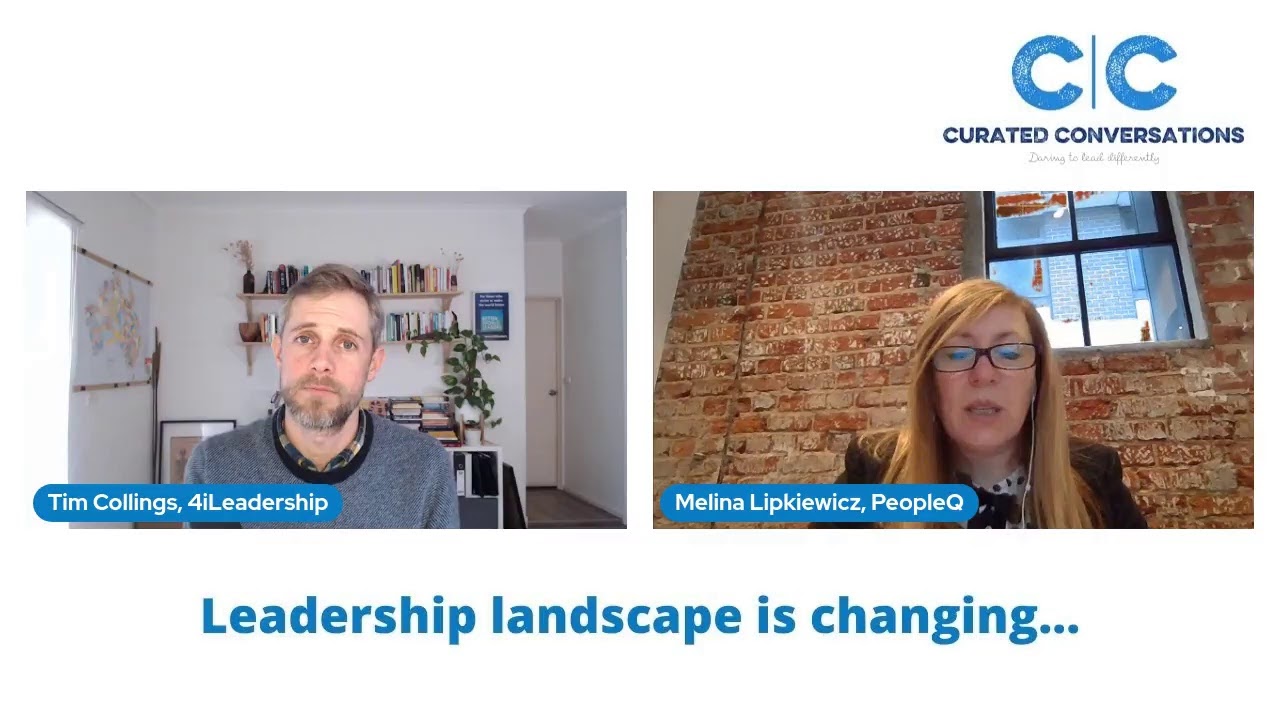
- The Leadership Landscape is changing
Are you ready to evolve too? Discover a framework for the future of leadership with the authors of Curated Conversations.
- Global Trust is on the decline.
Are your leaders using language that is eroding team trust? As the global trust barometer continues to show a decline in Trust, the call for Leader's is to be aware of thoughts, behaviours and language that will erode Trust in the workplace. Trust is critical in teams, it's that glue that holds it all together, its the intangible element that enables us to feel safe, to be vulnerable, to know the team has our back. It's the behaviour in others that let's us know integrity is alive, we can rely on our team mates and promises are kept. When a leader cultivates high levels of Trust, they are referred to as transparent, inclusive, authentic, caring, consistent, reliable, their actions align with their words, they follow through, they are honest. They use language that is non judgemental, they listen. They are a role-model. They understand the importance of language in creating a collaborative and trusting workplace. They understand what culture is needed for people to thrive at work. Everything happens through conversation, so start with language. Rather than let others guide you into what language to use, shift your thinking so we use language that co-creates solutions with our peers, teams and other leaders. Here are a few easy tips to do so; It starts with mindset. Set an inclusive mindset. Consider how you might downregulate judgement, or suspend it in a conversation or team meeting. Get a bit more curious and listen. A but is as good as a No, so think about replacing those But's with And's It's the small tiny movements that matter, and the concept of marginal gains that can dramatically shift Trust @Work! Here's an article with a few more things to consider. To get deep with building trust in teams, talk to us about how Conversational Intelligence program for leaders can help or how we bring this expertise into our executive coaching programs. https://hbr.org/2021/06/build-your-reputation-as-a-trustworthy-leader?utm_medium=email&utm_source=newsletter_weekly&utm_campaign=weeklyhotlist_activesubs&utm_content=signinnudge&deliveryName=DM136869&fbclid=IwAR19mEwhLmnBjALgpzx-QGmiSvgrmKhaPajDNAE8oz62RRAwgUFgvfdanwA
- Understand your team's culture
create change and performance uplift with PQfactor
- Six things they don't tell you about stress.
Fact #1: Your body doesn’t care if it’s a big stress or a little one. Remember all those times you told yourself, it's ok, I'm not stressed it's small in the scheme of things? Well apparently our body doesn't discriminate when it comes to stress. Big or small, stress affects our body in a predictable way. Fact #2: Stress can make smart people do stupid things. I've been here, you reflect back on how you've just navigated a situation, or regulated yourself and wondered, why oh why did I just behave like that? Fact no 2 is why! Stress causes cortical inhibition, which basically means we are no longer in sync. Fact #3: People can become numb to their stress. Most of my life I've told myself "I don't feel stressed" as my thinking style is an optimistic one and in challenging circumstance's I could always find the good. Download the PDF at the end of this article and I can tell you I've suffered from almost all of these. This one really resonates with me as I was great at adapting to challenging situations and so mentally I was numb to stress, but my body told me otherwise. Fact #4: We can control how we respond to stress. We can take back control with the Heartmath approach. Its a science backed approach based on the heart-brain system, proven to deliver sustainable outcomes for participants. Fact #5: The best strategy is to handle stress in the moment. Human's are awesome at ignoring or avoiding until something drastic occurs, then we act. The best approach is to deal with stress in the moment and the Heartmath program does that by teaching life changing science backed practices to help you build your resilience and deal with stress in the moment. And let's face it, in this VUCA world, the stressors in our environment are on the way up. The Resilience Advantage Program gives participants science backed tools to build their resilience and better manage their environmental stressors. Melina Lipkiewicz is a Heartmath mentor and certified trainer of the Resilience Advantage Program. She is also certified in many emotional intelligence tools and programs, and brings this together with her leadership experience to deliver positive change in the workplace. To find out more about how this program can help you or your business, message us today. melina@peopleq.com.au I 0498 800 008
- The intangible elements of organisational performance
CULTURE and the Curated Conversationalists